
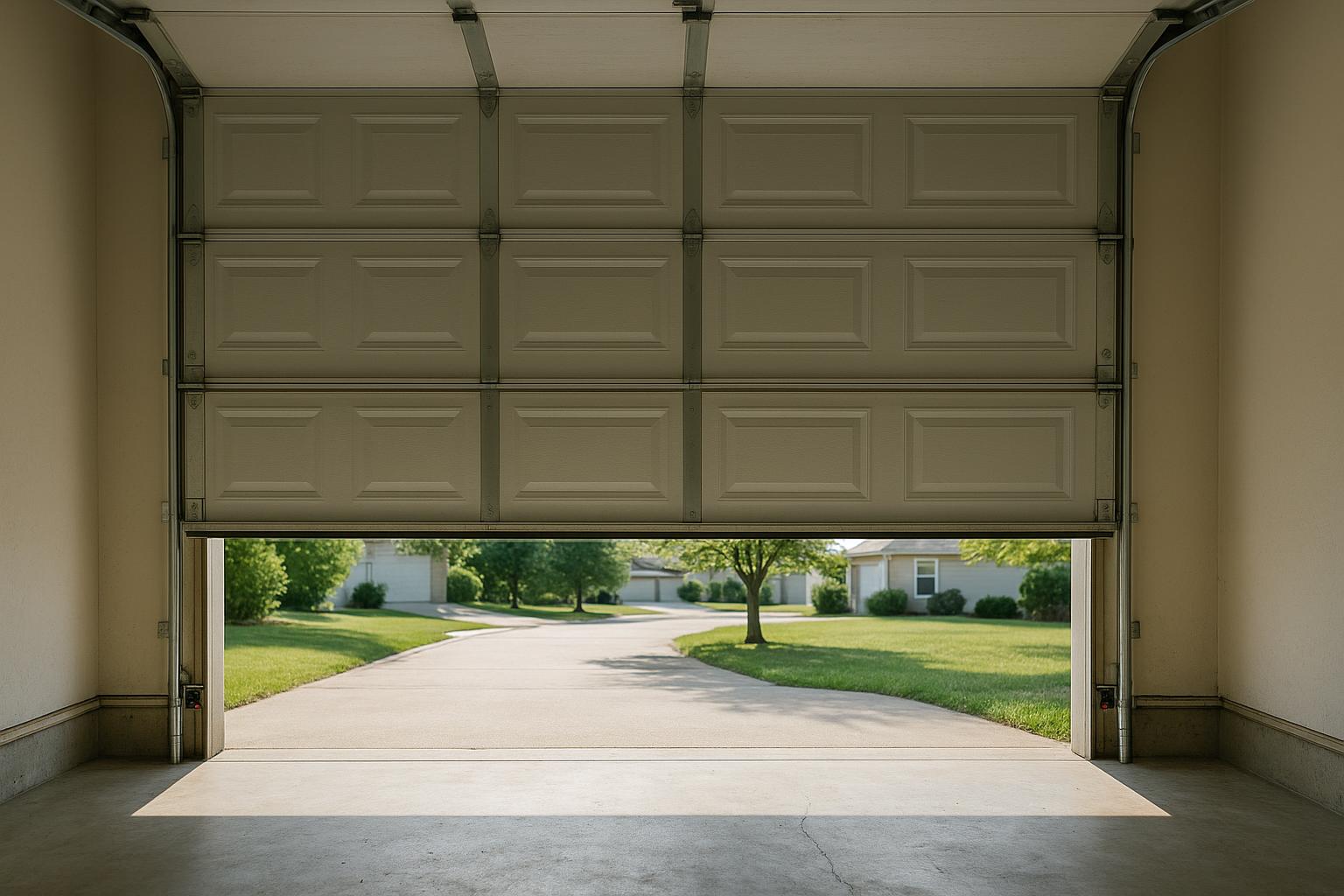
That Frustrating Reverse: What's Really Going On
You press the button on your garage door remote. The door starts coming down smoothly. Then, about halfway down — or sometimes just inches from the floor — it stops, reverses, and goes right back up. You try again. Same thing. Maybe you try holding the wall button down, and it still won't cooperate.
This is one of the most common garage door problems we see here in Gahanna, and it's also one of the most misunderstood. Homeowners often assume the opener is broken or the door itself is damaged, but the real cause is usually much simpler — and often fixable without replacing major components.
Let's walk through the most likely reasons your garage door reverses before closing and what you can do about each one.
1. Misaligned or Dirty Safety Sensors
This is the number one cause of a garage door that reverses before reaching the floor. Every garage door opener manufactured after 1993 is required to have photo-eye safety sensors — two small devices mounted near the bottom of the door tracks on either side. They send an invisible beam across the opening. If anything breaks that beam, the door reverses to prevent closing on a person, pet, or object.
Here's the thing: these sensors don't need much to get thrown off. Common causes include:
- Dirt or cobwebs covering the sensor lens
- Slight bumps from a bike, lawnmower, or trash can knocking a sensor out of alignment
- Sun glare hitting one sensor directly, which can interfere with the beam
- Loose mounting brackets that let the sensor shift over time
Start by wiping both sensor lenses with a soft cloth. Then check that both sensors have a steady green light (on most models). If one is blinking or showing amber, it's likely out of alignment. Gently adjust it until the light holds steady. This five-minute fix solves the problem for a surprising number of homeowners.
2. The Close-Force Setting Needs Adjustment
Your garage door opener has a force setting that controls how much resistance the motor will push through before deciding something is wrong and reversing. If this setting is too low, the opener may interpret normal friction — like a slightly stiff track or cold-weather resistance — as an obstruction and reverse the door.
On most openers, you'll find the force adjustment dials or screws on the back or side of the motor unit. There's typically one for the open force and one for the close force. Increasing the close-force setting slightly can sometimes solve the problem. However, be cautious — setting it too high can create a safety hazard. If you're not comfortable making this adjustment, it's a good idea to call a professional.
3. Worn or Broken Garage Door Springs
Your garage door springs do most of the heavy lifting — literally. They counterbalance the weight of the door so the opener doesn't have to work as hard. When a spring weakens or breaks, the door becomes significantly heavier for the opener to manage. The opener may start the closing cycle but then reverse because the load exceeds what it can safely handle.
Signs that springs might be the issue include:
- The door feels noticeably heavy when you try to lift it manually
- The door slams down quickly when disconnected from the opener
- You can see a visible gap in one of the torsion springs above the door
- The door opens unevenly or appears crooked
Spring replacement is not a DIY job. These components are under extreme tension and can cause serious injury. If you suspect a spring problem, call a qualified garage door technician. Here in Gahanna, we handle spring replacements regularly and can usually get it done in a single visit.
4. Track Obstructions or Damage
Take a close look at the metal tracks on both sides of your garage door. Even a small dent, a buildup of debris, or a section where the track has shifted can create enough resistance to trigger the opener's auto-reverse feature.
Run your hand carefully along the inside of the tracks and look for:
- Dents or bends in the metal
- Accumulated dirt, leaves, or small objects
- Sections where the track has pulled away from the wall
Minor debris can be cleaned out easily. But if the track itself is bent or misaligned, you'll want a professional to address it. Trying to bend tracks back into shape without the right tools can make the problem worse.
5. Travel Limit Settings Are Off
The travel limit tells your opener exactly how far the door should move in each direction. If the down-travel limit is set too far, the door will hit the ground and keep trying to push, which the opener reads as an obstruction — and it reverses. If it's set too short, the door won't close all the way and may bounce back up.
Adjusting travel limits involves small dials or screws on the opener unit. Small incremental changes are key here. Turn the down-limit screw a quarter turn, test the door, and repeat until it closes flush with the ground without reversing. Your opener's manual will have specific instructions for your model.
6. Wiring Issues or Opener Malfunction
If you've checked everything above and the door still reverses, there could be a wiring issue between the sensors and the opener, or the opener's logic board may be failing. Frayed wires, loose connections, or moisture damage — especially in older Gahanna homes where garages may not be fully insulated — can cause intermittent problems that are hard to pin down.
At this point, professional diagnosis is the most efficient path forward. A technician can test the electrical connections, evaluate the opener's condition, and let you know whether a repair or replacement makes more sense for your situation.
When to Call a Professional
Some of these fixes are straightforward enough for a handy homeowner to tackle. Cleaning sensors, checking for obstructions, and minor adjustments are all reasonable starting points. But if the problem persists, involves springs, or you're unsure about what you're looking at, don't hesitate to reach out.
At Gahanna Garage Door, we diagnose and fix reversing issues all the time for homeowners across Gahanna, New Albany, Westerville, and the surrounding Columbus area. We'll tell you exactly what's wrong, explain your options, and get your door working properly — usually in one visit.
A garage door that won't stay closed isn't just annoying. It's a security issue and an energy efficiency problem, especially heading into Ohio's colder months. The sooner you address it, the less likely it is to turn into a bigger repair down the road.