
Your Garage Door Springs Are Doing More Work Than You Think
Every time you open or close your garage door, the springs are doing the heavy lifting — literally. A standard two-car garage door can weigh between 150 and 250 pounds, and those springs are responsible for counterbalancing all of that weight. Your garage door opener isn't the muscle behind the operation; the springs are.
So it makes sense that over time, those springs wear out. But most homeowners in Gahanna don't think about their garage door springs until something goes wrong — a loud bang in the garage, a door that won't open, or a cable that's come loose. By understanding how long springs last and what the warning signs look like, you can avoid getting stuck with a door that won't budge on a Monday morning.
How Long Do Garage Door Springs Typically Last?
Most standard garage door springs are rated for approximately 10,000 cycles. One cycle equals one full open and one full close. If you use your garage door four times a day (twice out, twice in), that works out to roughly seven to nine years of use before the springs reach the end of their rated lifespan.
However, several factors can shorten or extend that timeline:
- Frequency of use: Families that use the garage as their primary entrance may cycle the door six to eight times per day, cutting spring life significantly.
- Climate and temperature swings: Here in central Ohio, we deal with everything from humid summers to freezing winters. Metal expands and contracts with temperature changes, which adds stress to springs over time.
- Maintenance habits: Springs that are lubricated regularly and part of a maintained system tend to last longer than neglected ones.
- Spring quality: Not all springs are created equal. Higher-cycle springs (rated for 20,000 or even 30,000 cycles) are available and can double or triple the lifespan of standard springs.
If your garage door is more than eight years old and still running on the original springs, it's worth having them inspected — even if everything seems fine right now.
Torsion Springs vs. Extension Springs
There are two main types of garage door springs, and knowing which type you have helps you understand what to watch for.
Torsion Springs
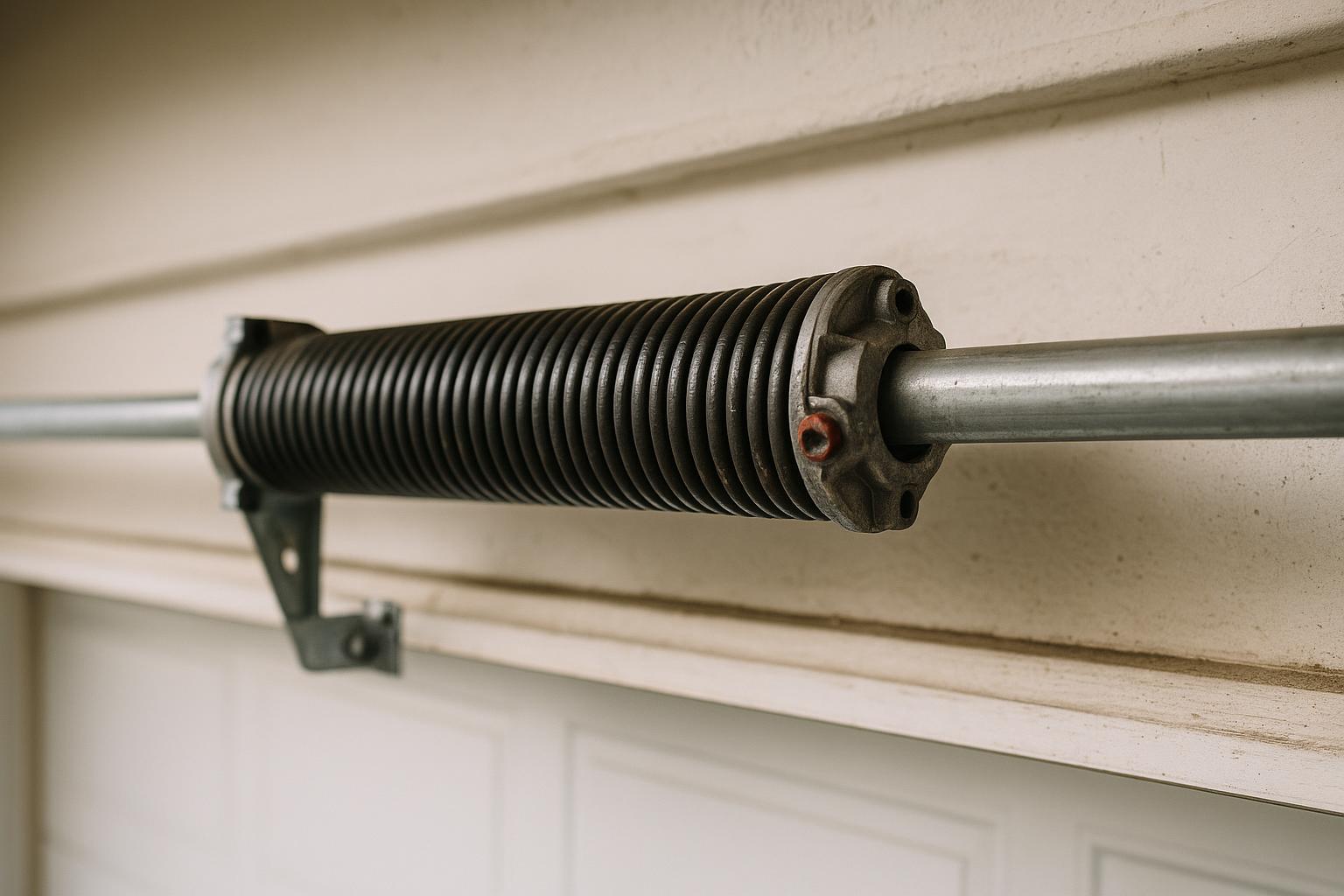
These are mounted on a metal shaft above the garage door opening. They twist to store energy and are the more common type on modern garage doors. Torsion springs tend to last longer, offer smoother operation, and are generally considered safer. Most homes we service in Gahanna and the surrounding areas — including New Albany, Westerville, and Reynoldsburg — have torsion spring systems.
Extension Springs
These run along the horizontal tracks on either side of the door. They stretch and contract to lift the door. Extension springs are more common on older or lighter doors. They can be effective, but they wear out faster and can be more dangerous when they break if safety cables aren't installed.
Regardless of the type, spring replacement is not a DIY job. These components are under extreme tension, and improper handling can cause serious injury. We always recommend calling a professional for this kind of work.
Warning Signs Your Garage Door Springs Are Failing
Springs rarely fail without giving you some warning first. Here's what to look for:
- The door feels heavier than usual: If you disconnect the opener and try to lift the door manually, it should move smoothly and stay in place when you let go about halfway up. If it's hard to lift or slams down, the springs are losing tension.
- Visible gaps in the spring coils: A healthy torsion spring has tightly wound coils. If you notice a visible gap or separation in the coils, the spring has likely broken or is close to breaking.
- The door opens unevenly: If one side of the door lifts higher than the other, one spring may be weaker or broken while the other is still functional.
- Loud bang from the garage: A breaking torsion spring releases a tremendous amount of energy and makes a sound that many homeowners describe as sounding like a gunshot. If you hear this, do not try to operate the door.
- The opener struggles or stops working: When springs fail, the opener has to work much harder. This can burn out the motor or cause the opener to stop mid-cycle. Many people assume the opener is the problem when it's actually the springs.
- Cables are loose or hanging: When a spring breaks, the cables that help guide the door can come loose. If you see slack cables, it's a strong indicator of a spring issue.
Should You Replace One Spring or Both?
This is one of the most common questions we get from homeowners in Gahanna and Columbus. If only one spring has broken, is it worth replacing both?
Our recommendation is almost always to replace both springs at the same time. Here's why:
- If one spring has reached the end of its lifespan, the other one is likely close behind. Replacing both now saves you from paying for a second service call in a few months.
- Mismatched springs — one new, one worn — create an imbalance that puts extra stress on the new spring and the opener.
- The labor cost is the biggest part of the job. Adding a second spring during the same visit is far more cost-effective than scheduling a separate appointment later.
How to Extend the Life of Your Garage Door Springs
While springs will eventually wear out no matter what, regular maintenance can help you get the most out of them:
- Lubricate the springs twice a year with a silicone-based garage door lubricant. This reduces friction and helps prevent rust, which is especially important with the moisture we get during Ohio winters and springs.
- Schedule annual maintenance. A professional inspection can catch early signs of wear, check spring tension, and make adjustments before a small issue becomes an emergency.
- Consider upgrading to high-cycle springs during your next replacement. They cost a bit more upfront but can last two to three times longer, which saves money over the life of the door.
- Keep the door balanced. If the door isn't properly balanced, the springs work harder than they need to on every cycle.
When to Call a Professional
If you're noticing any of the warning signs above, or if your springs are approaching the eight-to-ten-year mark, it's time to have them looked at. At Gahanna Garage Door, we inspect springs as part of every service call and give you an honest assessment of how much life they have left.
We serve homeowners throughout Gahanna, Blacklick, Columbus, Westerville, New Albany, and Reynoldsburg. Whether you need an emergency spring replacement or just want peace of mind with a routine inspection, we'll show up on time, explain what we find, and give you straightforward options — no pressure, no upselling.
Your garage door springs are working hard every single day. A little attention now can save you from a big headache later.